Serve Robotics: How robots could be financed
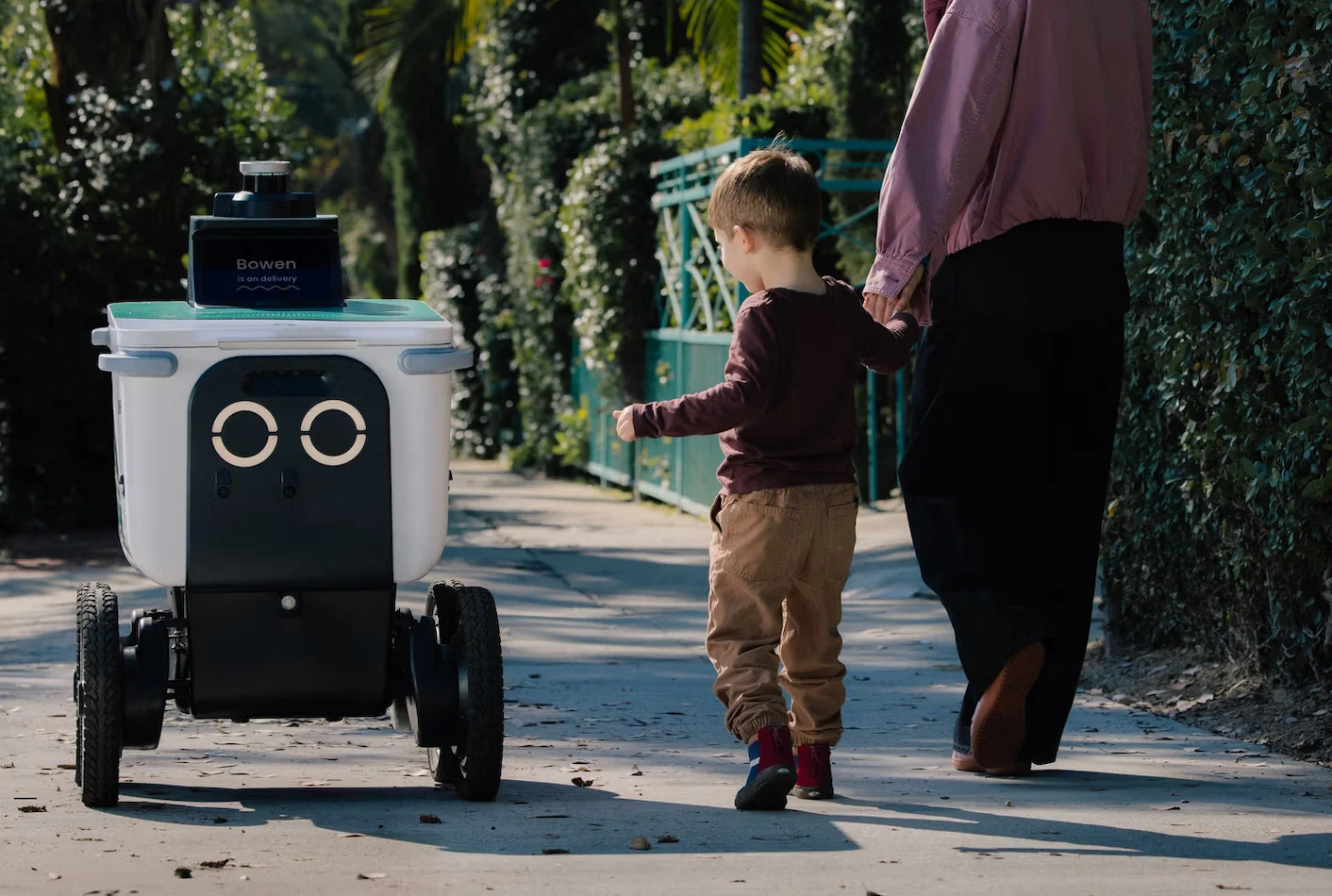
Serve is robotics OEM, founded in 2021 in Redwood City, California. It's a spinout of Postmates, which Uber had acquired in 2020 for $2.65 billion. The company builds its own sidewalk delivery robots, and operates them on its own fleet.
In June 2022, it engaged Farnam Street Financial Inc. in an equipment lease agreement with farnam street to cover its cost of building robots. By this point it had already raised $30.5m in equity and $2.5m in debt.
This deal is the earliest fully public sale leaseback of a startup’s own robot fleet. In simple terms, it build and sold its robots to Farnam who leased it back to them for a monthly rent. Serve then operates and the robots on to food/grocery delivery platforms.
The deal paper and structure
The master lease agreement is dated June 6, 2022, as mentioned, was structured as sale leaseback with a total equipment cost of $4.2 million which Farnam paid the OEM (Serve).
| Particulars | Values |
|---|---|
| Equipment | Autonomous sidewalk robots, manufacturer fees and shipping |
| Supplier | Serve Robotics |
| Cost | $4,200,000 ($3,500,000 hardware, $700,000 non-hardware) |
| Lease Rate Factor (LRF) | 0.040815 on hardware, 0.047459 on non hardware |
| Monthly Rent | $176,073.80 |
| Term | 24 months |
| Security Deposit | $352,147.60 |
| Expansion Option | $15 million of hardware |
| Buy option | 40% of cost or return |
| Casualty Amortization rate | 890 basis points over 3 year treasury rate |
The lease rate factor is just monthly rent per dollar of equipment value. for $1 million of hardware at 0.040815, the payment is $40,815 a month.
Important clauses to note:
- Rider 1: Rent is tied to the 3 year treasury rates. It resets at commencement, if rates have risen.
- Rider 2: Farnam has right of first refusal on any future Serve lease. if skipped, serve pays 5% of the equipment cost.
- Rider 3: If Serve buys the robots back , Farnam retains all rent, tax, and security deposit.
- Section 12: if robots are lost, serve pays a casualty value: 100% of cost for the first 9 months, then cost amortized at the 3 year treasury plus 890 basis points.
Section 12 gives us insight into Farnam's implied target yield: the 3 year treasury plus 890 basis points, fixed on the commencement date. When the lease was signed, this was around 12%.
By November 1, 2022, when the lease commenced the rate had climbed to around 4.62% which meant the target yield was lifted to an estimated 13.5%.
Interim Construction Period (July to October 2022)
After signing the paper, Serve works on manufacturing the robots and pays $544,422 to Farnam as interim rent.
The interim rent was charged at the full lease rate for 86 days. Serve booked the full amount of $544,422 as interest. The paper functionality operates like a construction loan with lease paperwork.
Commencement of Lease (November 2022)
The Schedule 001R replaces the original agreement, Serve delivers the robots to Farnam:
| Particulars | Values |
|---|---|
| Equipment | 70 robots x $63,654.30 = $4,455,800.86 |
| Commencement | November 1, 2022 |
| Rent | $189,262/month, paid in advance |
| End of term | 24 months, October 31, 2024 |
| Security Deposit | $189,262 x 2 months = $378,524 |
| Buy option | 40% of cost or return |
Rent increases to $189,262 from $176,073.80 primarily driven by:
- Higher cost of construction, over the $4.2m estimate.
- Increase in Treasury rates by around 1.5%
The Farnam math and underwriting
- Interim rent paid = $544,422
- Total lease payments = $4,542,288 ($189,262 x 24 months)
- Total payment received = $5,086,710 (Interim rent + Lease payments)
The lease payments alone cover ~102% of the equipment cost. With interim rent, Farnam recovers its investment and meets its target return without relying on the robots to have any residual value.
| Scenarios | Farnam's annual yield (24 months) |
|---|---|
| Serve returns robots (worth zero) | ~15.4% |
| Serve buys robots at 40% original cost | ~49.1% |
Even the zero residual case lands above Farnam's casualty cause, the ~13.5% yield target. From the paper, you can infer that Farnam underwrote the deal assuming the robots would be scrap to them, the 40% purchase option was pure upside.
Farnam’s bet was on the assumption that Serve could keep raising money to pay the monthly rent, and that robots were essential for their operations so giving them away was never an alternative.
How Serve treated the lease
According to the Financial statements, Serve kept the robots on their own books. They capitalized $3,561,288 as robot assets with a 2-year depreciation cycle. This is interesting because in a standard sales leaseback, the assets are depreciated on the Lessors books, Farnam in this case.
Meanwhile, Serve was also facing a cash crunch. It ended 2022 with $2.7M in cash and a monthly burn of about $1.4M. In June 2023, it reported only $18,912 of cash against $8.35M of current liabilities. The company was kept alive by convertible notes and founder loans.
On July 31, 2023, It was reported that Serve had merged into Patricia Acquisition Corp and raised about $10M. The merger meant that Serve's accounting was now going to be public. Their audited 2022 statements called the Farnam deal a “Failed Sales and Leaseback” and applied this treatment from the beginning of the lease in November 2022.
The $4.46m Farnam paid was recorded as debt rather than sale proceeds. The monthly payment of $189,262 and the interim was now considered principal and interest.
The deal now highlights two versions:
- The agreement: Farnam owns the robots, Serve rents them.
- The financial statements: Serve owns the robots, and Farnam lent Serve money against them.
The Final Lease Restructure
Even though the merger money bought in liquidity, it was burning fast and by September 30 it had only $3.5 million left and was Serve disclosed “substantial doubt” about its ability to continue as a going concern.
By December 31, 2023, cash was down to $6,756 on high operations and research costs. Only 29 of their robot fleet was active and earning daily.
On December 28, 2023, Serve and Farnam signed Schedule 002 to replace 001R:
| Particulars | Values |
|---|---|
| Start date | January 1, 2024 |
| Term | 15 months, ending march 31, 2025 |
| Rent | $26,200 for months 1 to 3, then $189,262 |
| Buy option | 45% of cost, $2,005,110 (notice 120 to 180 days ahead) |
| Buy option skipped | Automatic 12 month renewal at full rent, then a buy option at 20% |
The new schedule remove the option to return the robots. Serve could either buyback the robots for $2.0M, or be forced into a 12-month, $2.27M lease, with a 20% buyback option ($891k).
The terms also highlight how tight money was at Serve: 3 months of near free rent, then full rent from April 2024. In January 2024, Serve raised $5m of convertible notes designed to convert at its next offering.
Schedule 002 was a 90-day bridge for Serve to find its next source of capital and Farnam charged for making it: 5 more months of term, 5 more points on the buyout, and no returns.
The Bridge holds
On april 17, 2024, Serve sold 10 million shares at $4.00 in an underwritten offering, raising $35.8m net, and uplisted to Nasdaq. The full rent to Farnam resumed that month.
In October 2024, Serve unveiled its third generation robot, built ~35% the manufacturing cost of the robots it was still leasing from Farnam.
In January 2025, Serve raised another $80m at $19.00 a share, implying a market value of about $1.05b. This was probably driven by venture capital's focus on Physical AI, a 2,000 robot deal with Uber Eats and a strong roaster of investors like Uber and Nvidia.
By March 31, 2025, Serve had paid off the lease in full and bought its robots back from Farnam, reportedly for $2.25m. With the launch of the generation 3 robots, Serve committed to buying back the robots it was already replacing.
The Deal Scorecard
Farnam's books:
| amount | |
|---|---|
| Equipment cost | ($4,455,852) |
| Interim rent received | $544,422 |
| Security deposit (Kept on purchase) | $378,524 |
| Schedule 001R rent | $2,649,668 |
| Schedule 002 rent | $2,349,744 |
| Buyout at 45% | $2,005,110 - $2,250,000 |
| Total capital returned | ~$7.9m to $8.0m |
| Capital multiple | ~1.80x |
| Annualized rate of return (IRR) | ~50% |
By any standard, Farnam did very well. Serve paid ~50% yearly for 70 robots it made, carried them to $0 on its own books, and paid $28,644.43 to buy them back.
Meanwhile, Serve said its third generation robots would cost as little as ~35% of the second generation to build, about $22,300 a unit. Serve paid more to buy back its fully depreciated generation two robots from Farnam.
This could be a problem for financing robot fleets, they may potential never have any residual value. Each new generation could beat the last on cost and performance. Another concern is redeploy-ability, the robots could only be operated by Serve and its software.
But its important to consider that this could also be because Serve was simply too early in its product cycle to use asset-based financing.
ITEL and Computer leasing
Something similar happened with computers in the 1970s. Itel built one of the largest computer leasing businesses, $1.7 billion in IBM mainframes. Around 80% of it was leveraged with debt and Itel also worked with Lloyd's to build recovery floor instruments with the a bet that the machines will have have predictable residual curves.
Then IBM launched new mainframes at lower prices and better performance. The residual curves were all nullified and the old machines close to worthless. Itel lost $443m in 1979 alone and Lloyd's took heavy losses as well.
But the computer leasing market survived, operators and lessors learnt to price risk better and computer leasing thrives as one one of the largest equipment finance global markets today.
Historically, the financialising any emerging technology begins with stakeholders getting burnt and the losses force the market to build better risk infrastructure and pricing benchmarks.
It's very probably that once the cost curves flatten and robots are no longer OEM software locked, they gain residual value, redeploy-ability, and potentially unlock a secondary market.
Serve's Side:
There is no public documentation on why Serve choose to build an equipment leasing program so early on. Maybe it because there was a venture drought in 2022 or maybe they just them trying to be the first ones to do it.
Debt, structured well, is meant to protect the company from dilution but in this case Serve had no profits or long-term contracts. Every payment to Farnam, about $7.98m in total, was funded by selling shares at $3-$4 in 2023-2024 and $19 in 2025.
Now lets analyze how that compared with simply raising the $4.46m as equity:
| How Serve could have raised the money | Stock sold | Price per share | Shares sold | Value of those shares (Jan 2025, $19) |
|---|---|---|---|---|
| Equity in 2022 (SAFE price) | $4.46m | ~$3.56 | ~1.25m | ~$23.8m |
| Equity at the 2023 merger | $4.46m | $4.00 | ~1.11m | ~$21.2m |
| Equity in January 2024 | $4.46m | $2.42 | ~1.84m | ~$35.0m |
| Farnam lease | ~$7.98m | avg ~$5 | ~1.5m | ~$29m |
Note: ~$5.2m of the Farnam lease payments were funded with stock sold at $2.42 to $4 (2022 to 2024). The last ~$2.8m of payments and buyout, came from the January 2025 raise at $19.
So the deal was not just a failed leaseback, it was also an expensive experiment. It cost about 1.5m shares, more dilution than simply raising equity at the 2022 or 2023 prices.
In March 2025, a month before buying its robots back, Serve's CFO announced:
"Due to our strong cash position, we no longer anticipate funding of our 2,000 robot fleet through equipment financing.” Dropping leasing he said, would save them ~$20m over two years. With $123m in the bank at the end of 2024, and another $80m raised in January, Serve chose to built its next fleet without debt.
How to finance a Robotics Supercycle
It’s tempting to read the Serve deal as proof that debt is dangerous for hardware companies. I strongly believe that this is the wrong conclusion. Serve was simply too early in trying to finance robots pre-commercialization and performance data.
This is extremely relevant today as robotics companies are seeing record capital inflow (about $48b) and equity feels cheap. But supercycles like this are never funded by equity alone. Equity builds the technology, debt scales it.
Compute is the clearest recent example. In 2022, a rack of GPUs wasn't financeable: expensive hardware, a new generation every couple of years with no residual values and liquid secondary markets.
Then three things changed:
- The hardware standardized
- GPU Neoclouds, rental market, and secondary market all emerged
- The off-taker contracts became multi-year deals with enterprise customers and AI labs
This opened the gateway to private credit. In August 2023, CoreWeave raised $2.3b in debt against its Nvidia chips, and another $7.5b less than a year later. Crusoe secured its first GPU-backed facility from Upper90, an initial $200m, and has added more since. In less than 3 years, GPUs became a $47 billion asset class.
At the core of unlocking private credit for emerging hardware is a Paradox:
- Hardware founders struggle with debt: They're technologists, deploying equity inefficiently on hardware assets when better financial structures exist.
- Private credit are not technical: Lenders want to move early but lack the agility and technical depth to underwrite emerging technologies at the point of commercialization.
Companies who can navigate this information asymmetry and engineer debt smartly will create massive empires. For Serve, a well structured deal, priced on contracts and hardware residual rather than the it's equity, would have cost far less.
The future of financing robots
Asset-based finance has always played a massive role in Supercycles. True scale in once emerging industries like solar, compute or even aircrafts or automobiles was achieved by engineering novel financial instruments and risk infrastructure.
For robotics, many of these layers are yet to be built. To understand them, we first must diagnose the problems with trying to finance new-age autonomous machines:
1. Lenders price the company
While lenders underwrite, the price comes down the probability of default and loss exposure. In a true lease for equipment other than robots, lenders have accumulated years of loss data and market structures enable predicting residual curves.
In Serve's case, Farnam had neither so they priced the deal on the company and not its contracts or hardware. This most likely applies to all robotics companies today.
2. Traditional leasing breaks for robotics
Equipment financing was designed for tractors and manufacturing machinery. These assets have established depreciation schedules, active resale markets and predictable specifications. Lenders understand these assets and can easily assess collateral value.
For robots, the hardware is generally unknown to Lenders and is constantly upgrading, creating obsolescence risks that traditional lenders cannot underwrite.
3. The Heterogeneous nature of robots
Unlike a solar cell, every robot has a unique purpose, form factor, bill of material, brain, and integration process. You can't pick up and drop a robot into a new environment or factory yet like you can with an excavator or a truck.
Moving it means re-integration: new mapping, new workflows, new safety approvals, a new brain. This is another reason why robots break traditional leases.
How to finance a robot fleet
Since the key bottlenecks have been established lets now talk about layers that could price better leasing and debt deals for Robotic companies like Serve to scale their fleets.
1. Solving the deployment gap is mission critical
On the technology side, the biggest hurdle is the massive chasm between impressive laboratory demos and reliable, large-scale, real-world operation, the deployment gap.
We need more robots deployed and collecting data in the real world. To scale financing, we need performance data at scale.
2. Telemetry must translated
Once deployed, Robots will generate enormous amounts of data which engineers will understand but underwriters won't.
Fleet data has to simplified to language lenders already use: units deployed, uptime, utilization, interventions per hour, revenue per robot, reported monthly and independently verified.
KwH analytics unlocked this for solar and Semi-analysis did it for compute. Performance databases and benchmarks are crucial to building new debt and insurance products.
3. Standardizing RaaS service agreements
The early debt deals in robotics will be lent against RaaS (Robotics-as-a-Service) agreements, where customers pay a monthly rent or per outcome/task.
Compute again is the most recent precedent. Even though GPUs were new to lenders, they financed companies like CoreWeave on multi-year off-taker agreements with creditworthy customers like Microsoft and Nvidia. Solar had a similar story a decade earlier, lenders financed them on 20-year power purchase agreements.
RaaS contracts fail here today. They're short and exit friendly because we're early in deployment. Once we overcome that standardizing terms like term, pricing, termination, uptime is essential.
3. Fleets must be fenced
Farnam’s exposure was to all of Serve: its burn, debt and R&D bets. The right structure is the one solar and GPU fleets already use: Put the hardware and the contracts into a separate, bankruptcy-remote company (an SPV) and lend to that. If the operator fails, the contracts continue to pay, and a backup servicer could continue running the robots.
4. The bill of material will unlock some residual value
A robot has a whole might not be worth much but its components - actuators, arms, lidar, cameras, batteries already have secondary demand. This could be how early residual curves get built by pricing the fleet at the component level.
5. Omni-bodied robot brains could unlock secondary markets
If we go back to the Serve deal, the reason the hardware was scrap to Farnam is because only Serve and its software could operate it, there was no reason for anyone else to buy them.
But today we have companies building general-purpose AI for robots, one brain to orchestrate any machine or fleet. Take Ultra, A RaaS operator building warehouse packing robots using the Pi's Vision-Language-Action (VLA) models.
Lets say Ultra raised a asset-backed debt round by putting its robots and contracts into an SPV. The contracts now pay into the SPV, lenders get repaid and then Ultra receives its share.
Now lets assume Ultra fails, how would it be different that Serve?
- Robots still earn: Since the robots sit in the SPV, they can continue to operate.
- Backup servicing: Since the robots use a third party robot brain, a service operator can step in and continue running the machines or license a new model.
- Robots keep a residual value: A robot body running on a third party brain will now have residual value and potentially unlocks a secondary market.
Bits, Atoms, and Dollars
The hardest problems, Compute, Robots, Factories, Energy are all capex intensive. Equity is perfectly suited for robotics R&D and opex. But real scale, and the capex behind it, will have to be funded by innovative debt and robot-based financing.
Packy McCormick and William Godfrey said it best "The future will be owned by companies that combine bits, atoms, and money. It belongs to the companies that combine the world’s best engineers with the world’s best financial engineers.”
Sources
Farnam street lease agreements (SEC EDGAR)
- Master Lease Agreement SE060622, June 6, 2022 (8-K Ex. 10.14)
- Lease Schedule 001R (10-K Ex. 10.16)
- Lease Schedule 002, December 28, 2023 (10-K Ex. 10.17)
Serve’s Financial Filings
- FY2022 Audited Financials (8-K Ex. 99.1): failed sale-leaseback
- Merger 8-K, August 4, 2023
- H1 2023 Financials (8-K/A Ex. 99.5)
- H1 2023 MD&A (8-K/A Ex. 99.6)
- S-1, September 15, 2023
- Q3 2023 10-Q
- FY2023 10-K
- Q3 2024 10-Q
- Q1 2025 10-Q: lease fully repaid on March 31, 2025
- Q2 2025 10-Q: share counts, $4 and $19 offerings, January 2024 notes at $2.42
- Q3 2025 10-Q
- FY2025 10-K: 2,000+ robot fleet
Serve Press Releases and Earnings Calls
- Q4 2024 Earnings Call Transcript, March 6, 2025 (MarketBeat)
- Q4 and FY2024 Results
- Serve, $86M Raised in December 2024 (January 6, 2025)
- Same Release, 8-K Ex. 99.1
- Serve, $20M Private Placement and Warrant Exercise (August 28, 2024)
- Serve Gen 3 Launch, October 16, 2024 (Nasdaq)
Serve Funding and Investors
- TechCrunch, $13M Seed Round (December 6, 2021)
- TechCrunch, Uber Spins Out Serve (March 2021)
- MarketBeat, Nvidia Investment in Serve
- Lawyer Monthly, Nvidia Exits Serve (February 2025)
- Motley Fool, Why Nvidia and Uber Back Serve (December 2024)
- Mugglehead, Serve Shares at New Highs (January 3, 2025)
Silicon valley bank term loan:
- Master Loan agreement, March 1, 2022
- First amendment, October 11, 2022
- Second amendment, April 21, 2023
- Third amendment, July 28, 2023
- Fourth amendment, Jan 3, 2024